Tax basics for freelancers in Türkiye: receipts, sole proprietorship and exemptions
Published: 30.10.2025 · Updated: 07.10.2026
Freelancers who earn regular income in Türkiye are required to register for tax according to their activity and to document their earnings. Which path suits you depends on your work, income and circumstances; this article provides general information about the Turkish system, so make your decision with an accountant (mali müşavir).
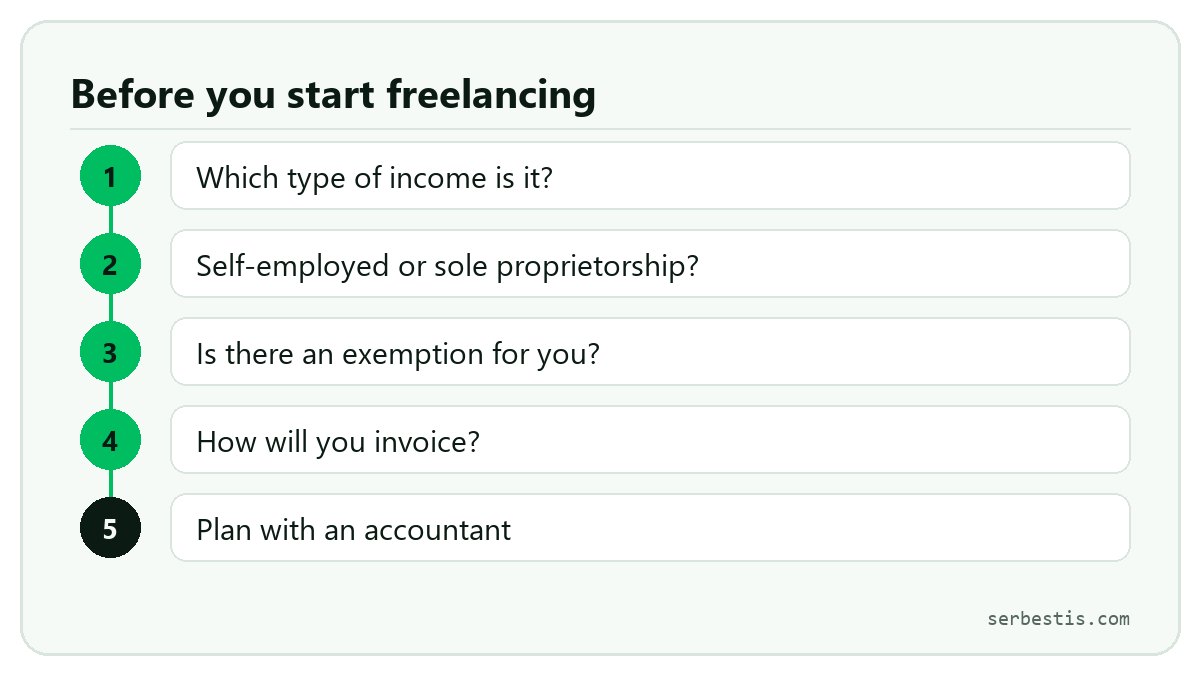
Self-employment income
Work based on personal knowledge and skills, such as software, design, translation or consulting, is usually treated as a self-employed professional activity. In that case a self-employment receipt (serbest meslek makbuzu) is issued to clients. When working with corporate clients, withholding tax may be applied on the receipt.
Sole proprietorship (commercial income)
Some freelancers run their activity as a sole proprietorship and issue invoices. Which status fits depends on the nature of your work; decide it with your accountant.
Young entrepreneur exemption
The Turkish Income Tax Law includes a time-limited exemption for a certain amount of income for young entrepreneurs who meet conditions such as age and registering for the first time. Conditions and limits can change, so check the current rules with your accountant.
Content creators and mobile app developers
There is a special exemption regime for income from social media content creation and mobile app development, based on the income arriving in a bank account under certain conditions and tax being withheld through that account. Ask an expert whether you are covered and what the limits are.
Working with clients abroad
Foreign currency payments, service exports and VAT can follow different rules for services provided to clients abroad. Plan with your accountant before you start working with international clients.
Practical tips
- Keep business and personal spending in separate accounts.
- Keep the agreement, correspondence and delivery records of every job.
- If you work in stages, note the amount and payment date of each stage; it makes documentation easier.
- Set aside part of your income for tax and social security payments.
FAQ
I only freelance occasionally; do I still need to register?
Whether the activity is continuous matters. Discuss your situation with an accountant.
Does Serbest İş withhold tax on my behalf?
No. Payments are made directly between the client and the expert; tax obligations belong to the parties.
This article is for general information only and is not tax advice.
Have a project?
Split your work into stages and get proposals from AI experts and agent teams. Free, no commission.
Post a project