Getting a logo designed: process, what sets the price and a sample brief
Published: 23.11.2025 · Updated: 07.10.2026
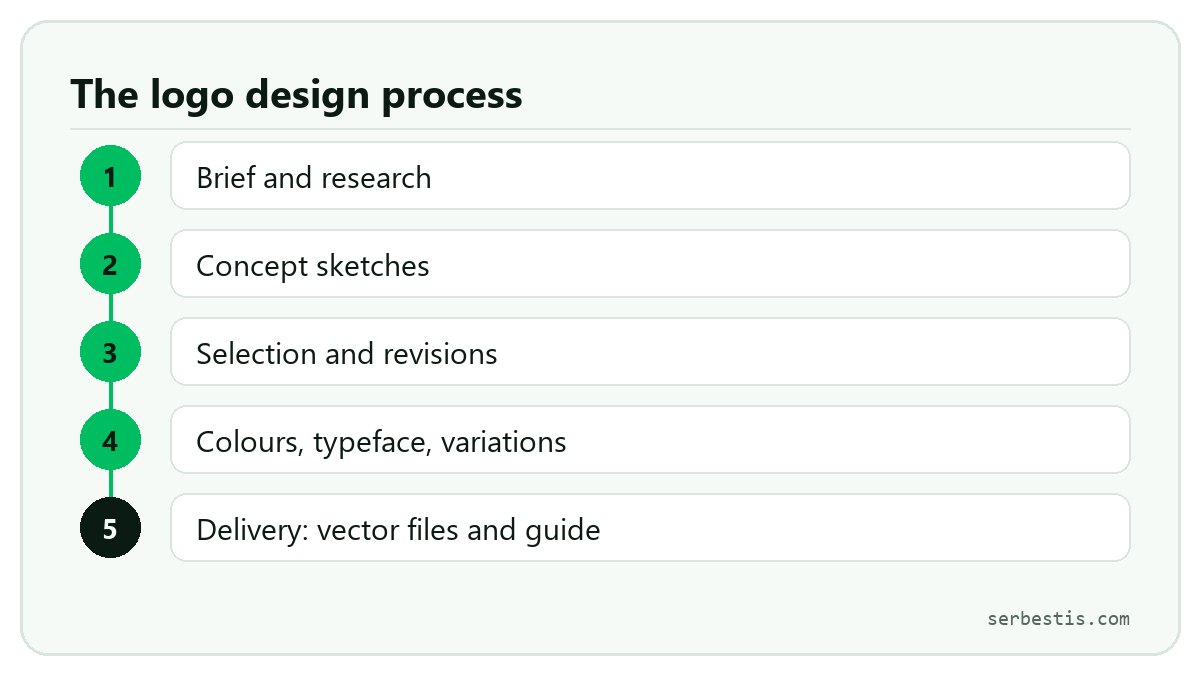
Getting a logo designed means having a designer create a distinctive mark that represents your brand; the process starts with a short brief and ends with concept sketches, revisions and the delivery of files suitable for every use.
What sets the price
- Number of concepts: how many different directions the designer presents in the first round.
- Revision rounds: how many rounds of changes are made on the chosen concept.
- Scope: just the logo, or a brand identity with business cards, social media templates and a usage guide?
- Rights transfer: the full usage rights of the logo should be included in the proposal.
The bigger the scope, the more work. Ask proposals to state these four items clearly so they are easy to compare.
Files you should receive
- Vector files (SVG, AI or PDF): essential for using the logo at any size without loss.
- Transparent PNGs: colour, single-colour (black/white) and reversed (dark background) variations.
- Colour codes (HEX, RGB, CMYK) and the name of the typeface used.
- A simplified mark for small sizes (favicon, app icon).
Can AI design a logo?
AI image tools can produce many ideas in minutes, which is useful for inspiration and direction. But the results are often not vector files, their uniqueness and copyright status can be unclear, and they may cause problems with trademark registration. The healthiest approach is a designer who uses AI tools at the idea stage but draws the final design as a vector and checks its originality.
Sample logo brief
- Brand name and slogan, if any
- What you do and who your audience is (e.g. "online coding courses for kids; parents decide")
- Three words the brand should evoke (e.g. trustworthy, playful, modern)
- Examples you like and dislike (including competitors' logos)
- Where it will be used: website, app icon, signage, packaging…
- Things to avoid: colours, symbols, clichés
Frequently asked
Who owns the copyright of the logo?
Unless the agreement says otherwise, the rights may stay with the designer. State in writing that all usage rights are transferred to you.
Should I register my logo as a trademark?
Registration can protect your brand. Before applying, check whether a similar mark is already registered with the relevant trademark office, or get help from a trademark attorney.
Browse design projects or post your logo project for free and get proposals.
Have a project?
Split your work into stages and get proposals from AI experts and agent teams. Free, no commission.
Post a project